
Climate AI Nordics Newsletter, May 2026
Welcome to the May edition of the Climate AI Nordics Newsletter!
Together, we are building a vibrant ecosystem of researchers and innovators dedicated to harnessing AI for the green transition. From local field data to global satellite imagery, the work being done across the Nordics is vital to tackling the climate crisis—and this month, our reach expands even further thanks to our new official partnership with Climate Change AI (CCAI). Dive in below to check out the final registration call for our June Workshop in Copenhagen, explore cutting-edge biodiversity tools, and browse the latest climate tech job openings. Enjoy the read, and remember to invite your peers to join us at [climateainordics.com/join](https://climateainordics.com/join)!This month’s issue features community updates, job opportunities, and our featured member.
2026 Nordic Workshop on AI for Climate
The 2026 Nordic Workshop on AI for Climate will gather researchers from the Nordics. This one-day, in-person workshop, will take place in Copenhagen, June 26th 2026. The workshop will feature a mix of keynotes, oral presentations, and posters around the topics of AI for tackling climate change, including AI for biodiversity and the green transition. The workshop will be a meeting point for a wide range of researchers from (primarily) around the Nordic countries.
Registration Deadline: June 5th (AoE)
(Read more)
Community spotlight
Featured project: BoquilaHUB - SOTA AI models for biodiversity
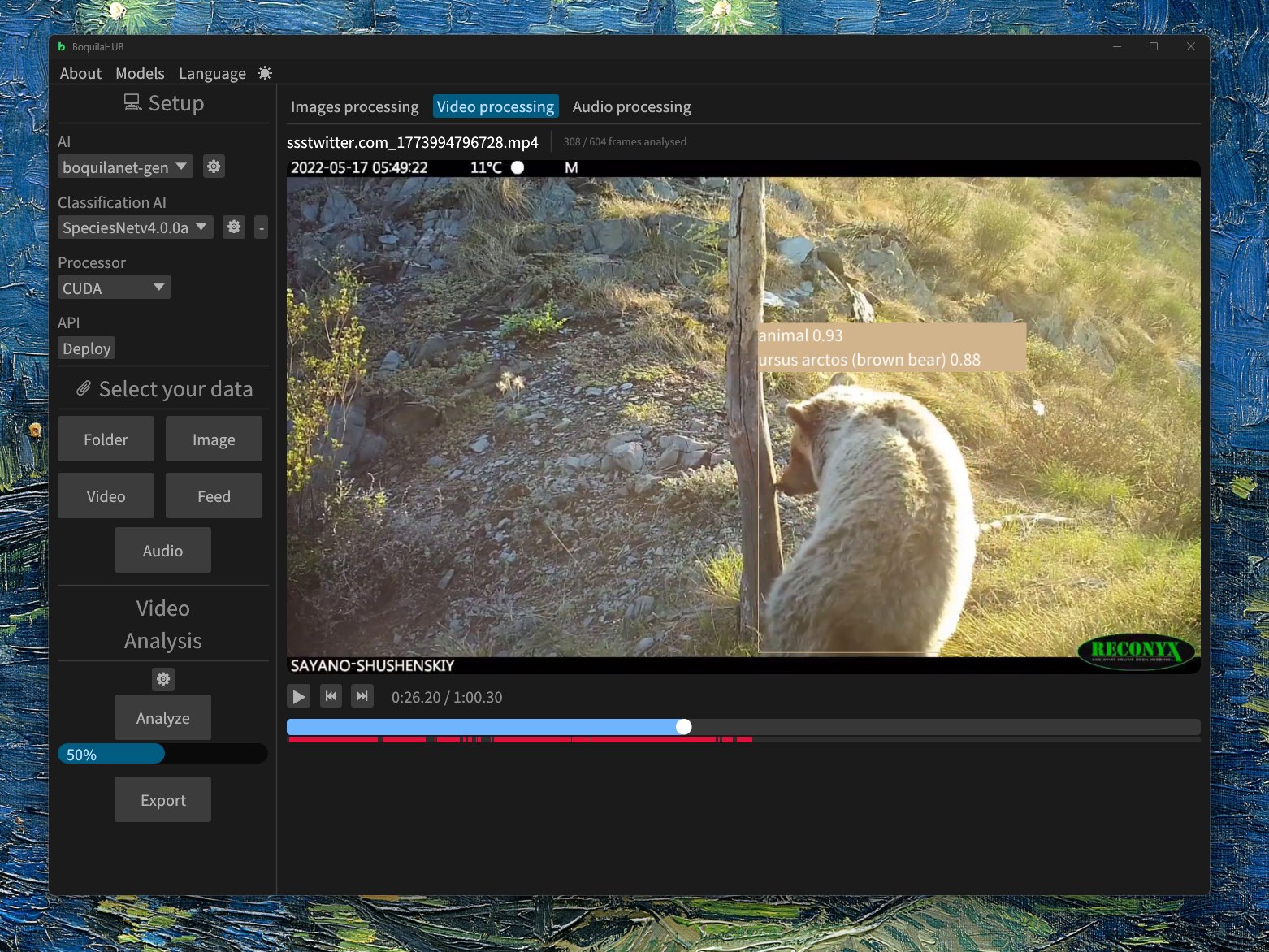
BoquilaHUB is an open-source desktop application that makes state-of-the-art AI for biodiversity accessible without complex setup or coding. It enables researchers to efficiently process large-scale camera trap and bioacoustic data using leading models like SpeciesNet and Perch 2. It also supports easy local deployment and shared GPU access, helping democratize AI tools for conservation worldwide.
Read more!
Featured member, May 2026: Alouette van Hove
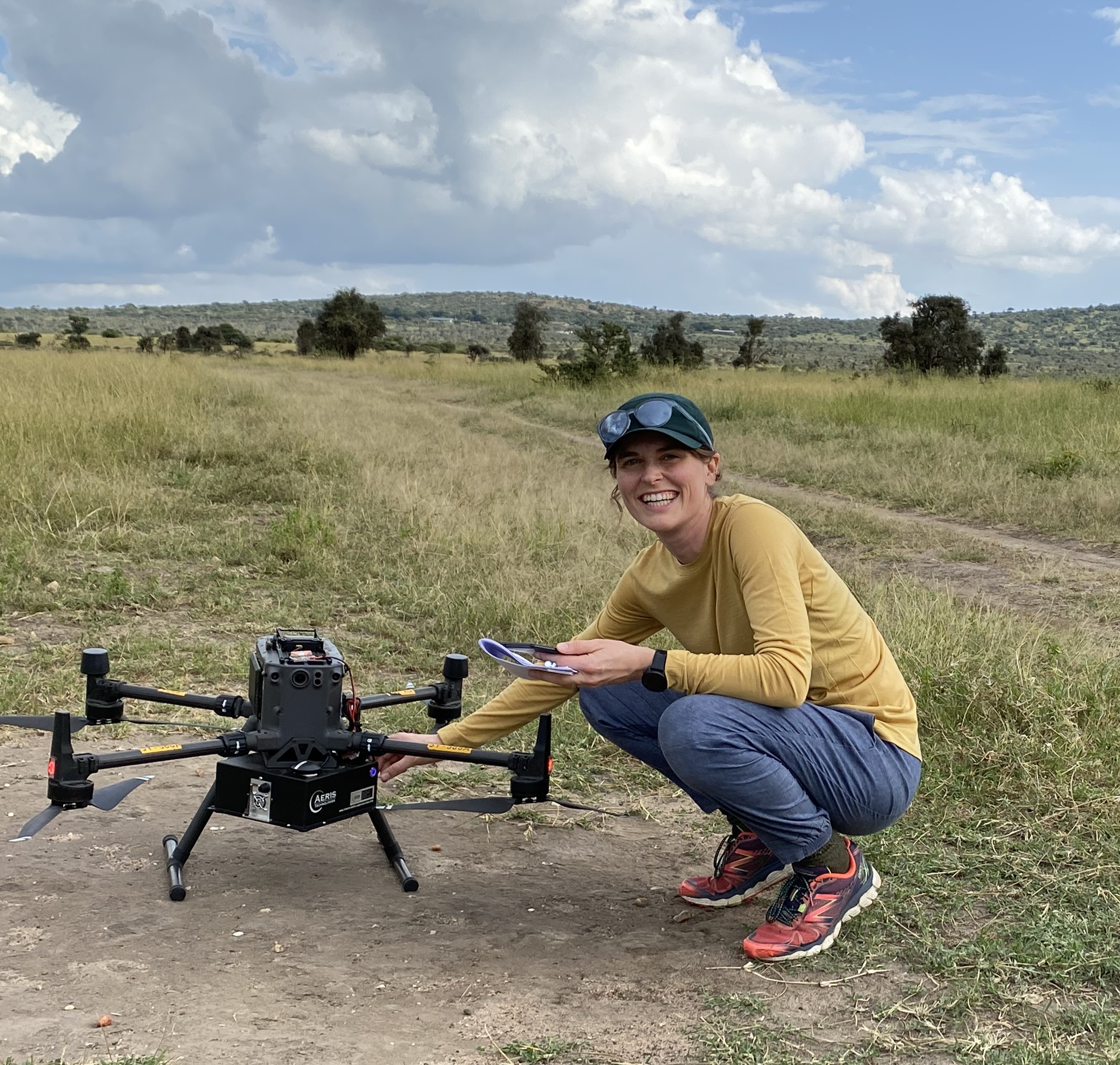
Alouette van Hove is a PostDoc at the University of Oslo and part of the core team of Climate AI Nordics. Her research focuses on probabilistic experimental design methods for quantifying Arctic methane emissions.
Read more!
News
Remote Sensing Training Course: Satellite and UAV Remote Sensing of the Arctic Biosphere
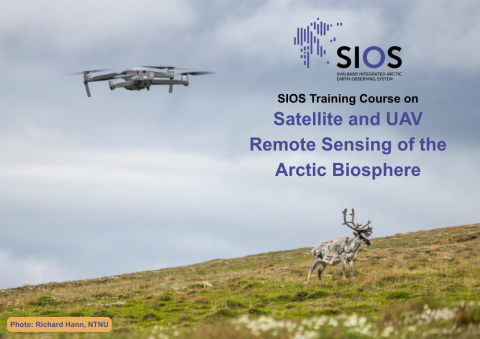
2026-05-28 Registration is open for the SIOS Remote Sensing Training Course: Satellite and UAV Remote Sensing of the Arctic Biosphere. The course will be held in Longyearbyen, Svalbard from 14 to 19 September.
Read more!
Several climate related workshops at ECCV 2026
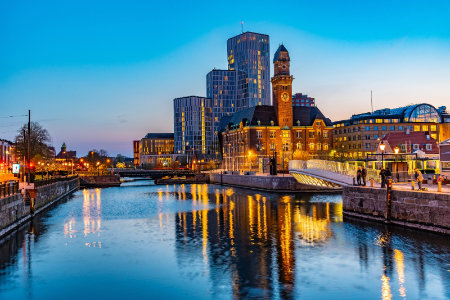
2026-05-27 ECCV 2026 in Malmö features as many as 93 workshops, several of which are related to climate and environment and Earth observation, highlighting a growing momentum for environmental applications in computer vision. Climate AI Nordics is proud to co-organize the second edition of the AI for Climate and Conservation (AICC2) workshop as a full-day event. The conference also features two specialized Earth Observation workshops and two additional climate and ecology-focused tracks, bringing together leading global researchers to address urgent planetary challenges.
Read more!
New Strategic Partnership: Climate AI Nordics and Climate Change AI
2026-05-08 Climate AI Nordics (CAIN) is proud to announce a formal partnership with Climate Change AI (CCAI). This collaboration aims to bridge the gap between AI expertise and climate action by facilitating the exchange of knowledge, resources, and joint initiatives between the Nordic region and the global community. By aligning our missions, we seek to accelerate responsible AI-driven solutions for climate mitigation and adaptation.
Read more!
Coming events
More is different: emergent social conventions and tipping points in AI populations

Event date: 2026-06-04.
Webinar with Ariel Flint Ashery, City St George’s, University of London. Social conventions are the foundation of social coordination, shaping how individuals come together to form a society. In this talk, I will present theoretical and experimental findings that demonstrate the spontaneous emergence of social norms in LLM populations, as well as the existence of tipping points in social convention. I will show that agentic AI populations can establish social conventions and highlight how collective biases can emerge even when individual agents appear unbiased. I will conclude by stressing how the ability of AI agents to develop norms without explicit programming has significant implications for designing AI systems that align with human values and societal goals.
Read more!
Climes interdisciplinary summer school 2026
Event date: 2026-06-15.
The Climes Summer School 2026 at Uppsala University offers doctoral, postdoc, and advanced master’s students an interdisciplinary curriculum focused on climate extremes, public health, and societal impacts. The program features a specialized AI component where participants use deep learning and natural language processing to automate the extraction of climate data from texts. While the school is free to attend, applicants must submit their motivation and support letters by March 22nd, 2026, and are generally responsible for their own travel and lodging.
Read more!
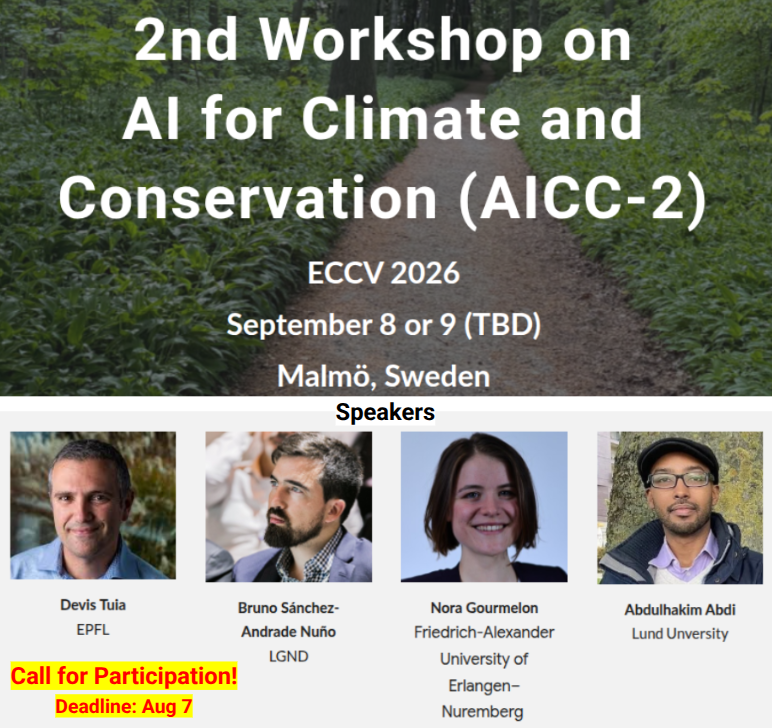
2nd Workshop on AI for Climate and Conservation (AICC-2) at ECCV 2026
Event date: 2026-09-08.
Climate AI Nordics is glad to announce that the 2nd Workshop on AI for Climate and Conservation (AICC-) has been accepted at ECCV 2026! The AICC-2 workshop will take place in Malmö, Sweden, Sep 8th or 9th (TBD).
Read more!
HydroImaging: Mining Imaging Data for Hydrological and Environmental Modelling
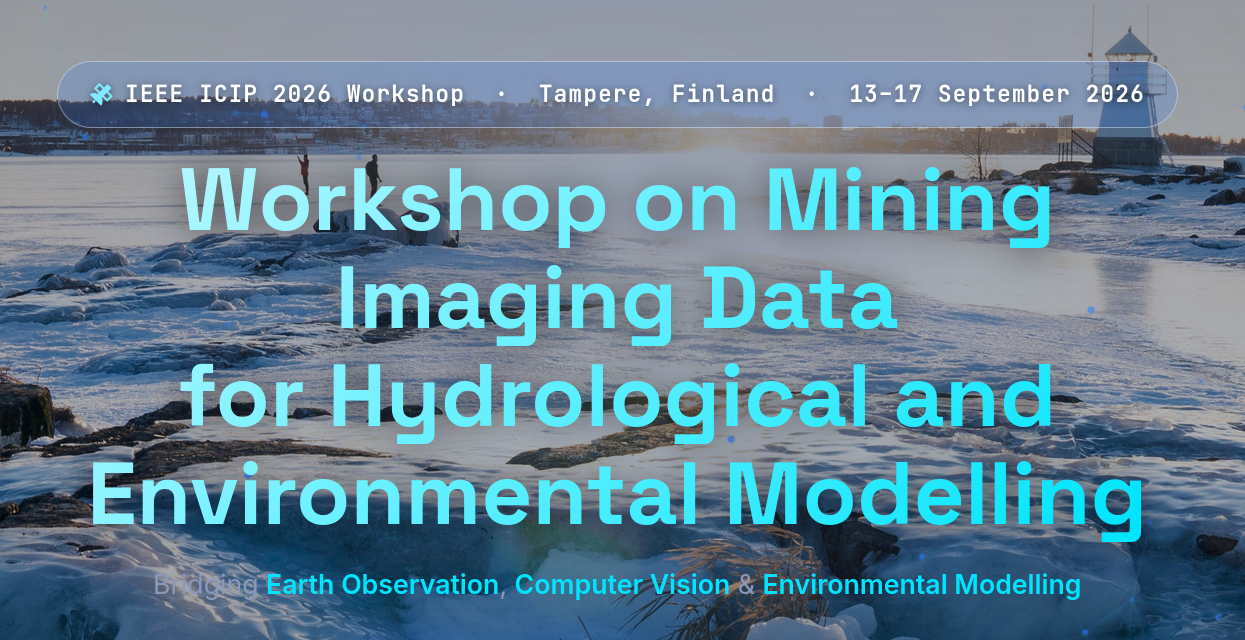
Event date: 2026-09-13.
Submit your research to HydroImaging, a half-day IEEE ICIP 2026 workshop in Tampere, Finland (September 13–17, 2026). This workshop bridges computer vision, remote sensing, and environmental science to address climate change and the water cycle. Contributions on data-centric ML, multi-modal fusion, and disaster mapping are welcome.
Read more!
Recent events
EarthShift: A new testbed for benchmarking robustnessGeospatial Foundation Models to real-world distribution shifts
This event took place 2026-05-28. Webinar with Kelsey Doerksen, University of Cape Town and Arizona State University. Geospatial Foundation Models claim to offer powerful solutions to simplify and accelerate real-world problems, enabling the capabilities to monitor, analyze, and predict changes on our planet. Current Earth Observation benchmarks to quantify the performance of these models focus on measuring performance on diverse tasks and applications, typically measuring generalization in-distribution. However, when models are deployed, they must generalize to many out-of-distribution scenarios, such as new time periods, geographies, and sensors; and in many contexts, these models are brittle. We introduce EarthShift: the first public testbed for benchmarking robustness across multiple realistic distribution shifts encountered in remote sensing. EarthShift enables users to measure distributional robustness by comparing performance in- and out-of-distribution using datasets from paired data sources, temporal windows, geographic locations, and sensors. EarthShift provides a testbed to guide future work to create foundation models that are robust and reliable in real-world applications.
Swedish Climate Symposium
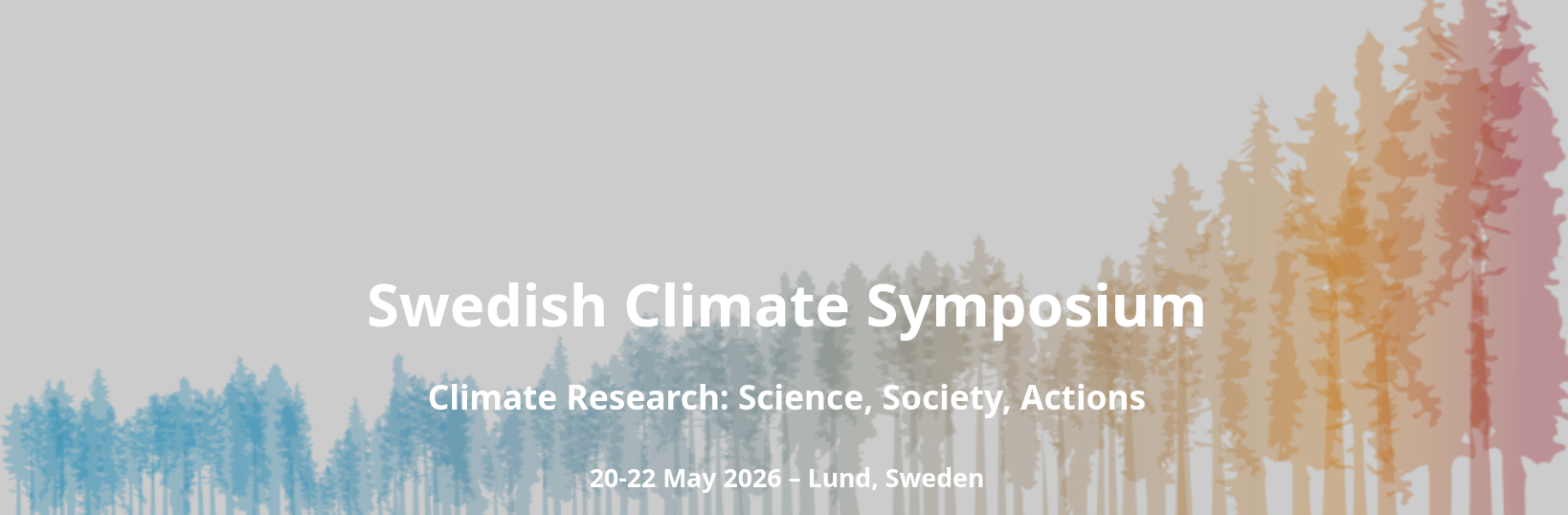
This event took place 2026-05-202026-05-22. The call for abstracts is now open for the Swedish Climate Symposium (Lund, May 20–22, 2026). The event focuses on “Science, Society, and Actions,” connecting researchers with policymakers. If you are applying AI or data science to climate challenges, don’t miss the chance to present your findings. Registration opens in January.
Enhanced Flood Detection through Innovative integration of PolSAR, metaheuristic optimization, and deep learning-based segmentation

This event took place 2026-05-07. Webinar with Solmaz Khazaei, KTH Royal Institute of Technology. Flood is the most common natural disaster in the world, and can have catastrophic impacts on human society and the environment, including infrastructure damage, agricultural losses, and casualties, resulting in widespread economic and social disruptions. In early studies, water body detection relied on on-the-spot investigation, hydrological models and common remote sensing techniques that face issues like slow processing and real-time delays. By addressing this challenges we propose a novel hybrid PoLSAR-metaheuristic-DL models and high-resolution remote sensing data to generate accurate and rapid flood mapping for one of the huge recent flood in France. Compared with standard synthetic aperture radars (SAR), polarimetric synthetic aperture radar (PolSAR) is an advanced technique of SAR remote sensing. So, by using polarimetric decomposition methods, features were extracted and feature selection problem, one of the most challenging, was solved by using metaheuristic techniques. The selected features fed into three deep learning-based segmentation models- U_Net_V3, Nested_UNet and Efficient_UNet. The reliability of the generated flood maps was evaluated using Accuracy, precision and recall metrics. Our experimental results indicate that Nested_UNet integrate with optimized PolSAR data achieves the highest segmentation performance, with an accuracy of 0.910, precision of 0.914, and recall of 0.909. These findings underscore the capability of Nested_UNet, demonstrates superior feature extraction abilities, making it a promising choice for real-time flood segmentation applications. Moreover, detecting the knowledge of flooded areas, officials can actively adopt steps to reduce the potential impact of flood, ensure the sustainable management of natural resources and mitigate flood impacts.
Job openings
Postdoctoral Researcher: Satellite Remote Sensing of Carbon Cycle Sources and Sinks
The Finnish Meteorological Institute is seeking a postdoctoral researcher to analyze and exploit satellite remote sensing datasets, including CO₂ and SIF observations, using AI methods for research on the carbon cycle, greenhouse gas emissions, and carbon sinks. This role involves developing advanced methods for data interpretation and source-sink estimation.
Deadline: May 25th, 2026
Postdoc in Production Management: AI-driven Sustainability and Resilience

KTH Royal Institute of Technology is seeking a postdoctoral researcher in Production Management to investigate how AI and machine learning can support sustainable and resilient production systems, including circular manufacturing and green industrial transition.
Deadline: June 17th, 2026
Postdoc in Modelling, Operation, and Control of Energy Systems – DTU Compute

DTU Compute is seeking a postdoctoral researcher to develop AI-driven solutions for modelling, operating, and controlling sustainable energy systems, focusing on forecasting, optimization, and state estimation for energy production and consumption.
Deadline: May 21st, 2026
Postdoc Deep Learning for Image-Based Biodiversity Surveys

NIBIO is seeking a postdoctoral researcher for developing deep learning and computer vision methods to analyze image-based biodiversity surveys, contributing to improved biodiversity monitoring in Europe.
Deadline: May 27th, 2026
Machine learning engineer for computer vision and controlled pesticide-use.
Dimensions Agri Technologies (DAT) are recruiting a machine learning engineer. The selected candidate will help reduce and optimize the use of pesticides by developing targeted schemes through machine learning model assisted computer vision.
Deadline: Rolling
Your news in the newsletter!
Make sure to share your work with us, by sending us an email ( contact@climateainordics.com), posting in our Slack or some other channel, and we’ll add it to the news feed! Take the chance of showcasing your work or your events to the community!
Also be sure to follow us on LinkedIn and BlueSky. Climate AI Nordics will have the most impact if you repost and like our stories!
Climate AI Nordics is a network of researchers working to harness AI in tackling the climate crisis through both mitigation and adaptation.
We promote the development of AI-based tools and optimization methods that support sustainable decision-making—helping reduce emissions, restore ecosystems, and build climate resilience.