
Several climate related workshops at ECCV 2026
Climate-related workshops at ECCV 2026
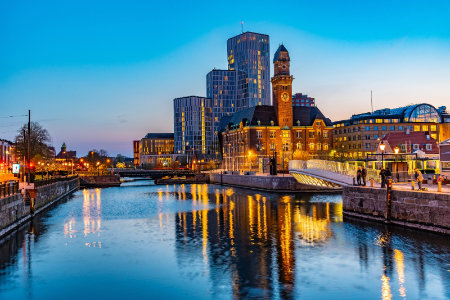
The complete lineup of 93 workshops for the European Conference on Computer Vision (ECCV 2026) in Malmö, Sweden has been officially announced. Among a massive roster covering foundational machine learning, generative AI, and robotics, there is a clear and inspiring momentum growing around using computer vision and machine learning to address our planet’s most pressing climate and conservation issues.
Out of the total lineup, seven (7) standout workshops focus directly on environmental sustainability: two dedicated primarily to Earth Observation (EO) and four dedicated to climate change, ecology and/or humanitarian causes.
We are incredibly excited to announce that Climate AI Nordics is organizing AICC2: The 2nd AI for Climate and Conservation Workshop, which has been selected as a prominent full-day event!
Spotlighting Climate & Conservation at ECCV
If you are attending ECCV in Malmö this September, these seven workshops features interesting applications of computer vision for planetary health, ecology, and remote sensing.
Our feature event: 2nd Workshop on AI for Climate and Conservation (AICC-2)
- Duration: Full-day
- Main organizer: Aleksis Pirinen
- Submission deadline: August 7th
- Workshop date: September 9th (full day)
- Learn More: AICC2 ECCV 2026 Website
Building on the success of our inaugural track, AICC-2 brings together researchers from machine learning, climate science, and ecology. This full-day workshop will dive into how advanced vision systems can monitor biodiversity loss, model climate risk, and optimize mitigation strategies. We invite the global community to join us in Malmö to push the boundaries of what climate AI can achieve.
Complementary climate & ecology tracks
Alongside AICC-2, three other crucial half-day and full-day workshops focus heavily on biodiversity, humanitarian causes, and/or natural resources:
2nd Workshop on Marine Vision (September 8th, full-day) Main organizer: Malte Pedersen Highlighting the critical need for automated computer vision solutions to overcome the unique physical and visual challenges of underwater imaging, enabling researchers to efficiently monitor and protect rapidly degrading marine ecosystems. Website: https://vap.aau.dk/marinevision/
3rd workshop on computer vision for ecology (September 8th, full-day)
Main organizer: Julia Chae
An vital forum focused on species identification, animal tracking, and behavioral analysis in the wild to support ecological research and anti-poaching efforts. Website: https://cv4e-workshop.github.io/CV4GOOD: Computer Vision for Humanitarian Action (September 8th, half-day)
Main organizer: Pier Luigi Dovesi
Born from a partnership between The Good AI Lab and Médecins Sans Frontières, this workshop pairs researchers building vision and Earth-observation pipelines with practitioners who can say what works in the field, what fails, and what is missing. Website: https://cv4good.thegoodailab.org/CVNH – Computer vision for natural heritage (September 8th, half-day)
Main organizer: Juan Miguel Valverde
Focusing on the preservation, documentation, and automated monitoring of vulnerable natural landmarks and ecosystem heritages worldwide. Website: https://computer-vision-for-natural-heritage.github.io/
Earth observation-centric workshops
For those working with satellite imagery and geospatial data streams, two dedicated workshops cover the infrastructure and models needed to sense planetary changes at scale:
TerraBytes II: Towards global datasets and models for Earth observation (September 8th, full-day)
Main organizer: Mikolaj Czerkawski
Addressing the challenges of scaling up vision models to ingest, process, and accurately interpret global-scale satellite and remote sensing datasets. Website: https://terrabytes-workshop.github.io/GAIA 2026: Geospatial AI and foundation models (September 9th, half-day)
Main organizer: Danda Paudel
Exploring how modern foundation models can be adapted to spatial, geographic, and temporal dimensions for land-use mapping and environmental prediction.
Event Details:
ECCV 2026 Workshops
September 8–9, 2026 Malmö, Sweden
As computer vision transitions from synthetic benchmarks to real-world applications, these workshops represent a vital bridge to mitigate and adapt to the climate crisis. We look forward to seeing you in Malmö this September to collaborate, share research, and expand the impact of Climate AI Nordics. Stay tuned for call-for-papers deadlines and speaker announcements!
Full list
https://eccv.ecva.net/Conferences/2026/Workshops