
Climate AI Nordics Newsletter, September 2026
Welcome to the September edition of the Climate AI Nordics Newsletter!
Enjoy our community highlights, updates from our partners, events, and new job opportunities!
We connect the Nordic region’s researchers and practitioners at the intersection of AI and climate action. Whether your focus is on emission mitigation, ecosystem resilience, or biodiversity, this community is built to help your work thrive.
If you know colleagues in academia, public agencies, or industry who share these interests, invite them to join us at climateainordics.com/join.
Community spotlight
Featured project: Wikimpacts - Automated global climate impact database
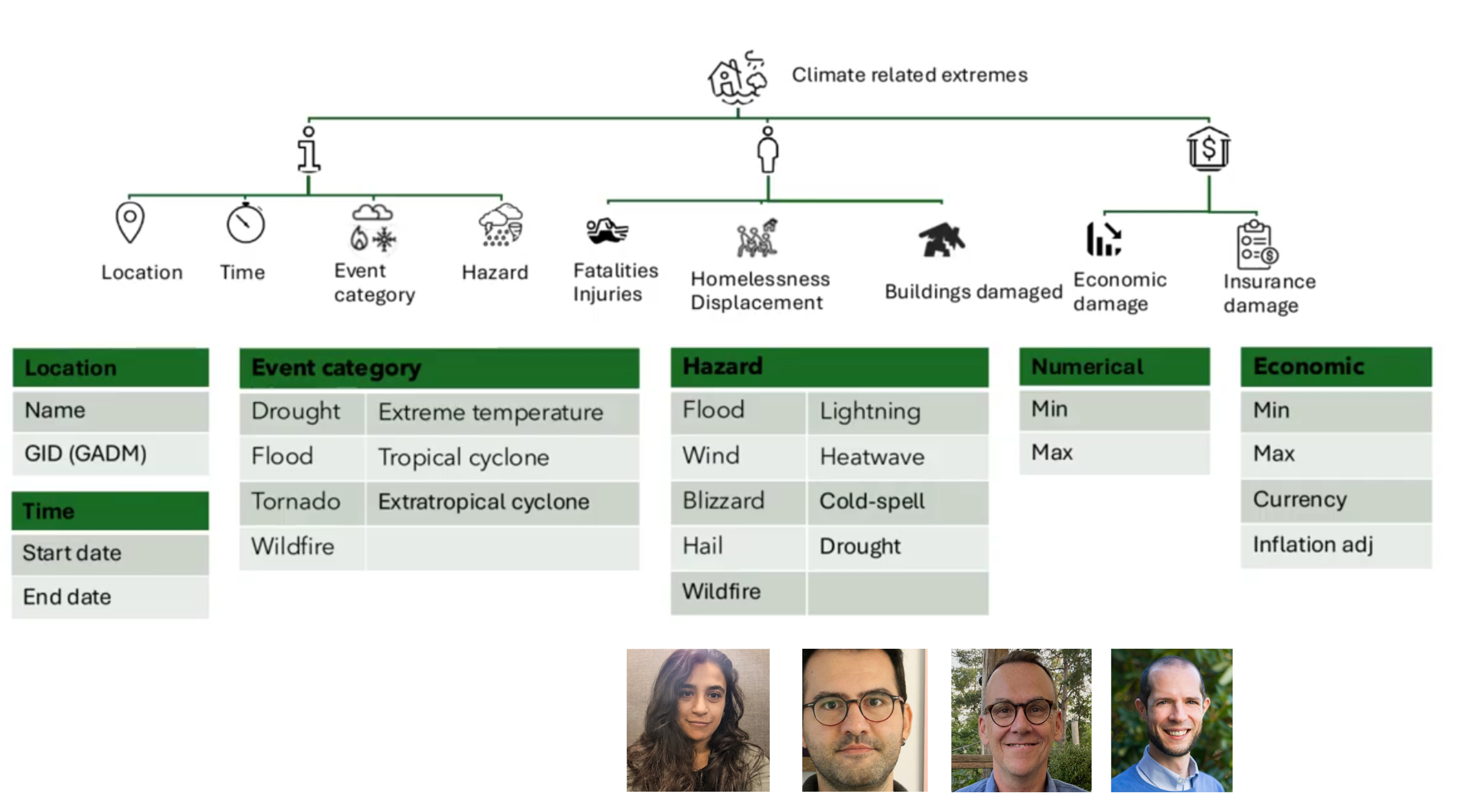
Wikimpacts 1.0 is an open-access global database of extreme climate event impacts built by extracting structured data from Wikipedia using large language models and natural language processing. Developed with contributions from RISE researchers as part of the CLIMES Center of Excellence (a partner organisation to Climate AI Nordics), Wikimpacts covers over 2,700 historical events and introduces granular sub-national impact data to empower climate resilience research.
Read more!
Featured member, September 2026: Stefanos Georganos
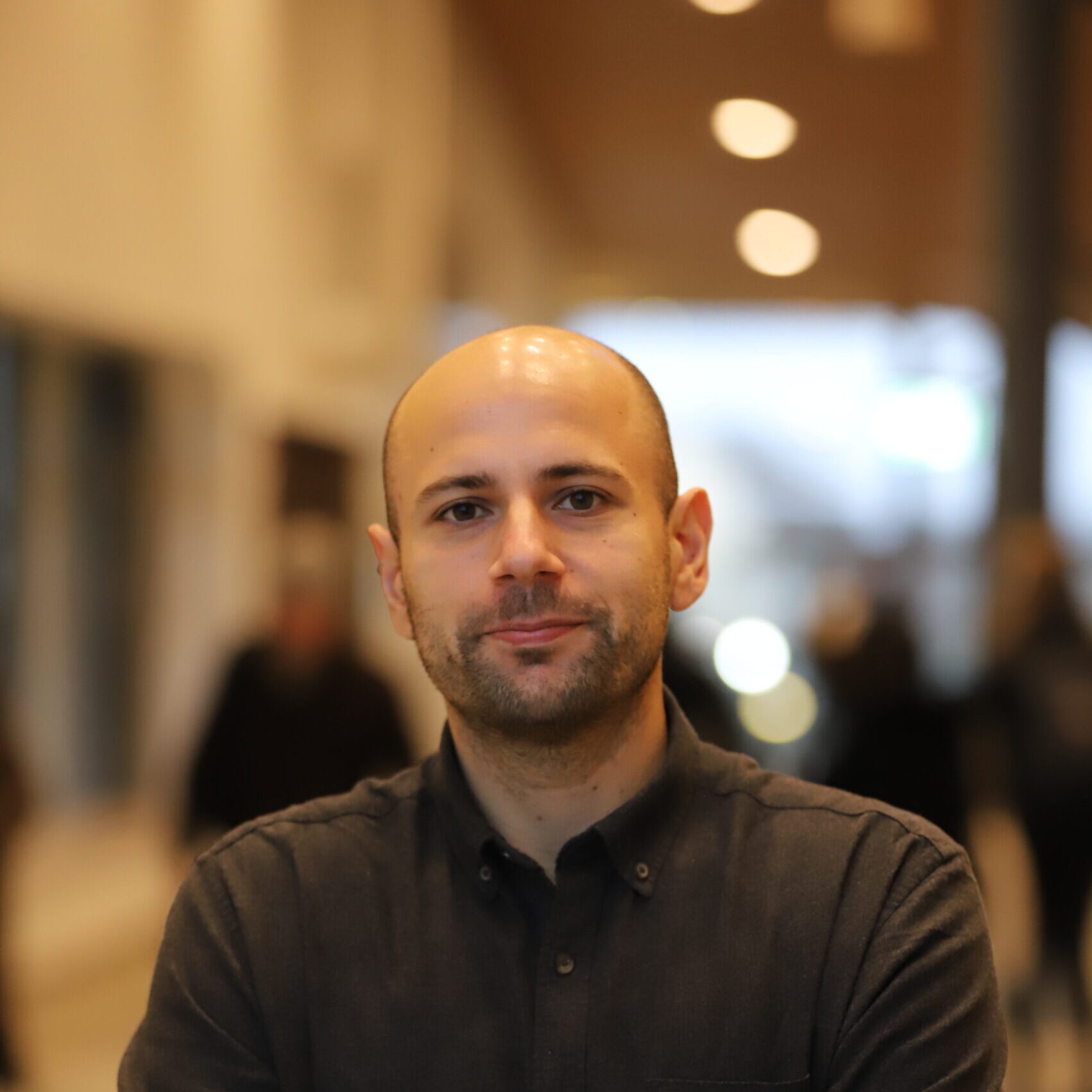
Stefanos Georganos is an associate professor in Geomatics at Karlstad University, Sweden and affiliated with the Free University of Brussels, Belgium. He works at the intersection of remote sensing, machine learning, and urban geography.
Read more!
News
Recap of the AICC-2 workshop at ECCV 2026 in Malmö
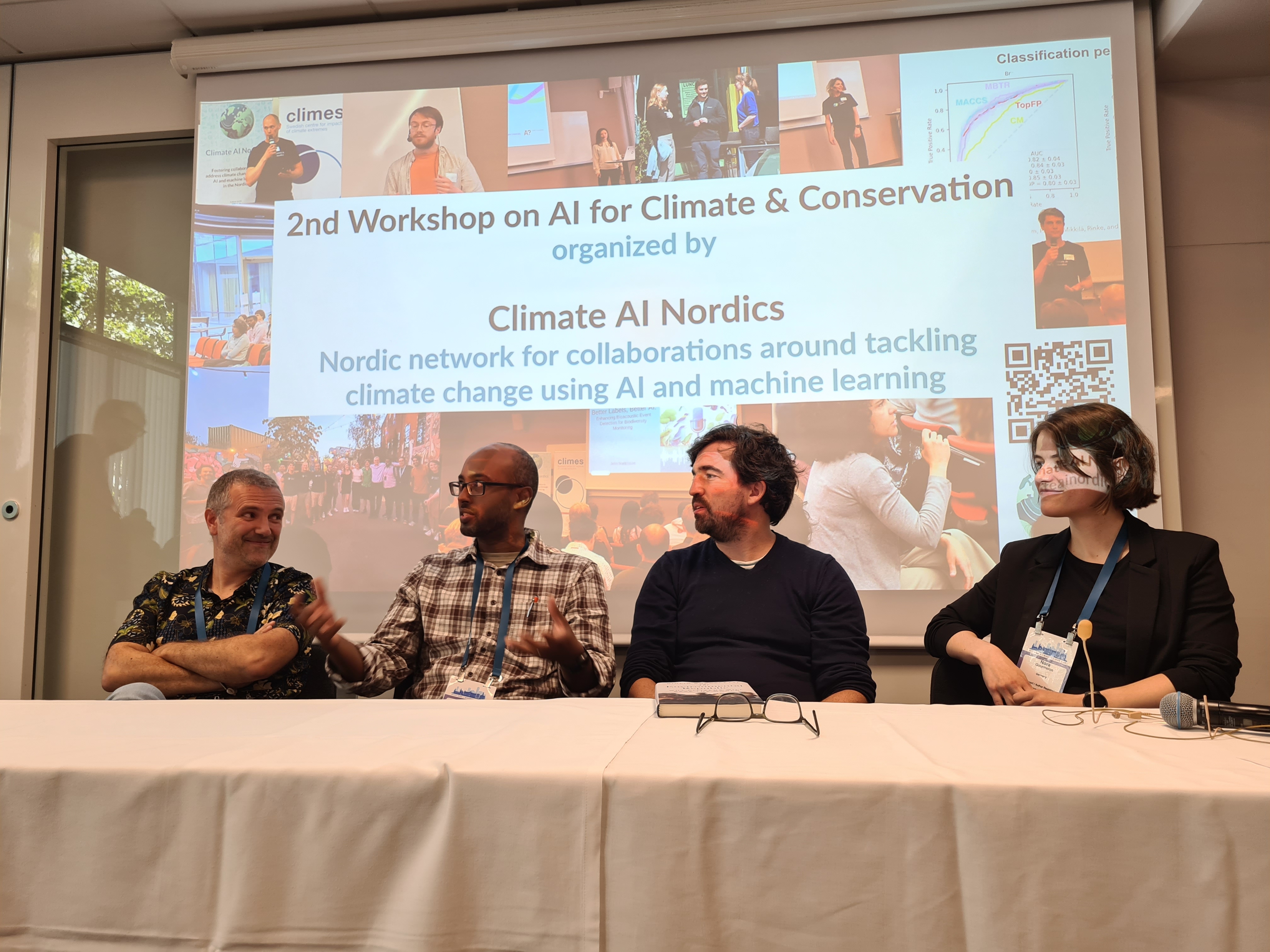
2026-09-16 From biodiversity monitoring and Arctic change to the future role of AI in conservation, AICC-2 showcased a diverse range of perspectives on AI for planetary impact. The workshop and accompanying social event created valuable opportunities for knowledge exchange and community building at ECCV 2026.
Read more!
Save the date: The 3rd Nordic Workshop on AI for Climate
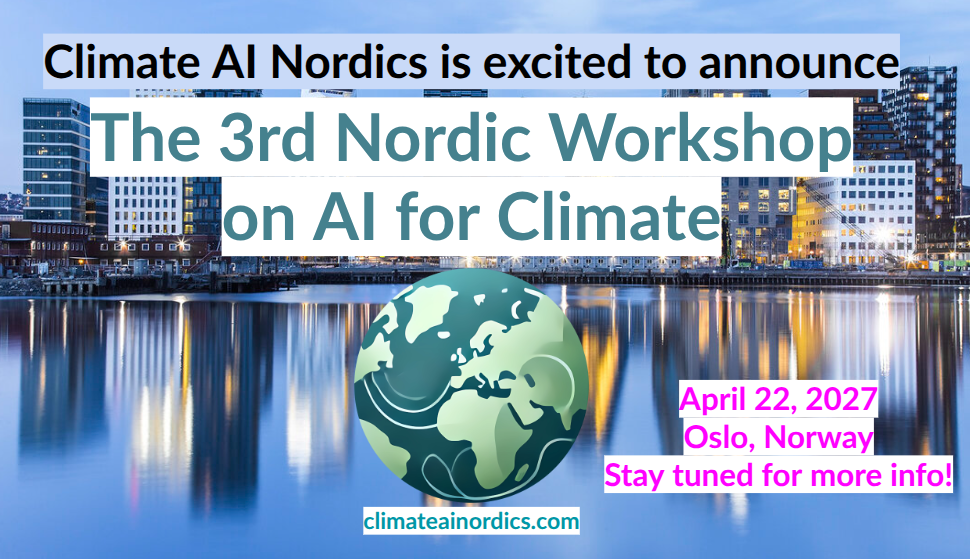
2026-09-15 Climate AI Nordics is happy to announce that our annual Nordic Workshop on AI for Climate returns again for a third time in 2027, this time in Oslo! Mark April 22nd 2027 in your calendars, and stay tuned for more info to come!
Read more!
Coming events
Machine perception for scientific measurement from satellite imagery
Event date: 2026-10-08.
Webinar with Rangel Daroya, University of Massachusetts Amherst. In many scientific domains, the goal is not simply to classify an image or produce a visually plausible segmentation, but to estimate quantities that scientists and decision-makers can use: river width, water extent, sediment concentration, habitat change, or other physical variables. These tasks require models that are robust to distribution shift, efficient under limited supervision, and reliable enough to support downstream measurement. In this talk, I will discuss machine learning and computer vision methods for this setting, with a focus on geospatial imagery and hydrology. Scientific domains such as remote sensing expose several fundamental limitations of current vision systems. Models must operate across sensors, geographic regions, seasons, and acquisition conditions, often with limited labeled data and multispectral inputs that differ from standard natural image benchmarks. They must also detect small or thin structures, handle temporal variation, and avoid errors that may appear minor under conventional vision metrics but lead to substantial errors in scientific measurements. I will discuss three aspects that try to solve these problems: learning transferable representations that can adapt across tasks and datasets, developing data-efficient perception methods for multispectral and geospatial imagery, and translating model predictions into reliable physical measurements. I will highlight work on task transfer, satellite representation learning, river segmentation, and downstream estimation of river width and other hydrological variables. More broadly, this work aims to develop robust, transferable, and data-efficient machine perception systems that can turn large-scale satellite and scientific imagery into reliable measurements of the physical world.
Read more!
Recent events
Aurora: A foundation model of the Earth system
This event took place 2026-09-24. Webinar with Ana Lucic, University of Amsterdam. Reliable forecasting of the Earth system is essential for mitigating natural disasters and supporting human progress. Traditional numerical models, although powerful, are extremely computationally expensive1. Recent advances in artificial intelligence (AI) have shown promise in improving both predictive performance and efficiency, yet their potential remains underexplored in many Earth system domains. Here we introduce Aurora, a large-scale foundation model trained on more than one million hours of diverse geophysical data. Aurora outperforms operational forecasts in predicting air quality, ocean waves, tropical cyclone tracks and high-resolution weather, all at orders of magnitude lower computational cost. With the ability to be fine-tuned for diverse applications at modest expense, Aurora represents a notable step towards democratizing accurate and efficient Earth system predictions. These results highlight the transformative potential of AI in environmental forecasting and pave the way for broader accessibility to high-quality climate and weather information. Link to paper: https://www.nature.com/articles/s41586-025-09005-y
Towards verified tree-level CO2 and H2O physiology, resolved at 30-min resolution

This event took place 2026-09-17. Webinar with Jaime Caballer Revenga, University of Copenhagen. This project addresses one major challenge in climate science: accurately quantifying how forests remove carbon dioxide (CO₂) from the atmosphere. Forests currently account for nearly one-third of the global land carbon sink, but their capacity to absorb CO₂ is increasingly threatened by climate change(s), land-use change(s), and environmental disturbance(s). At the same time, afforestation, reforestation, and carbon offset initiatives are expanding rapidly, despite persistent concerns about the reliability and transparency of the methods used to estimate carbon sequestration. The INFOSCO project (Integrating Forest Structure and Carbon Observatories) proposes a new approach by shifting the focus from forest-scale carbon assessments to continuous physiological estimates at the level of individual trees. By combining ecosystem CO₂ flux observations, laser-based measurements of forest structure, and theory of plant physiological processes, it aims to estimate the contribution of each tree to overall forest carbon uptake. This will provide a more detailed and biologically grounded understanding of carbon sequestration while remaining consistent with established micrometeorological measurements and theory. Methodologically, the research integrates data and concepts from ecosystem ecology, laser proximal sensing, plant physiology, and statistical modelling into a unified framework. The core modelling strategy uses a Bayesian hierarchical structure to quantify uncertainties at multiple levels. By means of Dirichlet regression the method ensures that tree-level estimates are consistent with ecosystem-scale micrometeorological observations. Beyond improving carbon accounting, the project aims to bridge between detailed field-based ecological measurements and AI models scalable to biogeographic applications. By linking high-resolution observations of individual trees with ecosystem-atmosphere fluxes, it seeks to advance both our understanding of forest physiology and the development of more robust tools for monitoring and verifying nature-based climate solutions.
HydroImaging: Mining Imaging Data for Hydrological and Environmental Modelling
This event took place 2026-09-132026-09-17. Submit your research to HydroImaging, a half-day IEEE ICIP 2026 workshop in Tampere, Finland (September 13–17, 2026). This workshop bridges computer vision, remote sensing, and environmental science to address climate change and the water cycle. Contributions on data-centric ML, multi-modal fusion, and disaster mapping are welcome.
AI for Planetary Health – ECCV 2026 Social
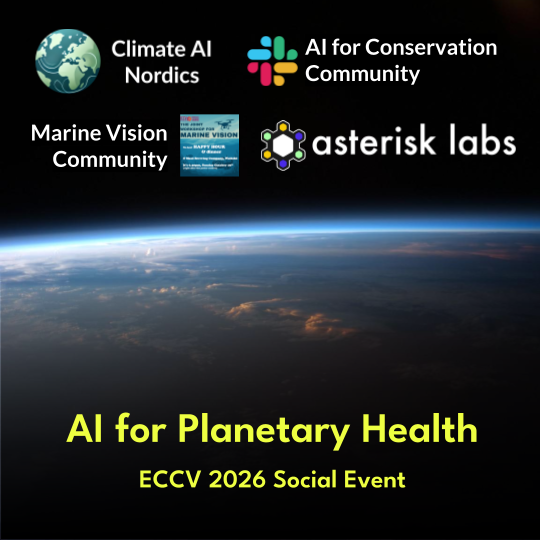
This event took place 2026-09-10. Join us for an informal evening social bringing together researchers, practitioners, students, and innovators working at the intersection of computer vision, AI, climate, biodiversity, conservation, and oceans. Whether you’re presenting a paper during ECCV, looking for collaborators, exploring new research directions, or simply interested in meeting others working on AI for planetary health, we’d love to see you there.
2nd Workshop on AI for Climate and Conservation (AICC-2) at ECCV 2026
This event took place 2026-09-09. Climate AI Nordics is glad to announce that the 2nd Workshop on AI for Climate and Conservation (AICC-) has been accepted at ECCV 2026! The AICC-2 workshop will take place in Malmö, Sweden, Sep 9th.
Job openings
PhD Scholarship in Multimodal AI for Forest Biodiversity Mapping

NIBIO is seeking a PhD candidate for developing cutting-edge multimodal artificial intelligence methods for forest biodiversity mapping and monitoring.
Deadline: October 25th, 2026
Postdoctoral fellow in Forest Remote Sensing and Climate Risk Assessment
Lund University is seeking a Postdoctoral fellow in Forest Remote Sensing and Climate Risk Assessment for a project focused on developing an operational, web-based service using satellite observations and AI to assess climate risks in Sweden’s forests, including drought, storms, and bark-beetle outbreaks.
Deadline: September 27th, 2026
PhD Research Fellow in Climate Data Analysis and Machine Learning Emulation of Hydrological Models

The University of Bergen is recruiting a PhD Research Fellow in Climate Data Analysis and Machine Learning Emulation of Hydrological Models to develop an AI-based hydrological model for analyzing unprecedented and compound extreme climate events within the DYNAMIC-AI project.
Deadline: September 30th, 2026
Intern for WWF’s Data & AI Team

WWF Sweden is seeking an Intern for its Data & AI Team to explore how artificial intelligence can responsibly support an environmental organization’s objectives, focusing on digital transformation, data-driven approaches, and implementing AI tools for efficiency and nature conservation benefits.
Deadline: October 12th, 2026
Fully funded PhD fellowship in Resource Efficiency for Generative AI

The University of Copenhagen is offering a fully funded PhD fellowship in Resource Efficiency for Generative AI to research and develop more efficient, sustainable, and accessible AI systems, focusing on reducing the computational and energy resources required for Large Language Models.
Deadline: October 10th, 2026
Machine learning engineer for computer vision and controlled pesticide-use.

Dimensions Agri Technologies (DAT) are recruiting a machine learning engineer. The selected candidate will help reduce and optimize the use of pesticides by developing targeted schemes through machine learning model assisted computer vision.
Deadline: Rolling
Your news in the newsletter!
Make sure to share your work with us, by sending us an email ( contact@climateainordics.com), posting in our Slack or some other channel, and we’ll add it to the news feed! Take the chance of showcasing your work or your events to the community!
Also be sure to follow us on LinkedIn and BlueSky. Climate AI Nordics will have the most impact if you repost and like our stories!
Climate AI Nordics is a network of researchers working to harness AI in tackling the climate crisis through both mitigation and adaptation.
We promote the development of AI-based tools and optimization methods that support sustainable decision-making—helping reduce emissions, restore ecosystems, and build climate resilience.