
Climate AI Nordics Newsletter, March 2026
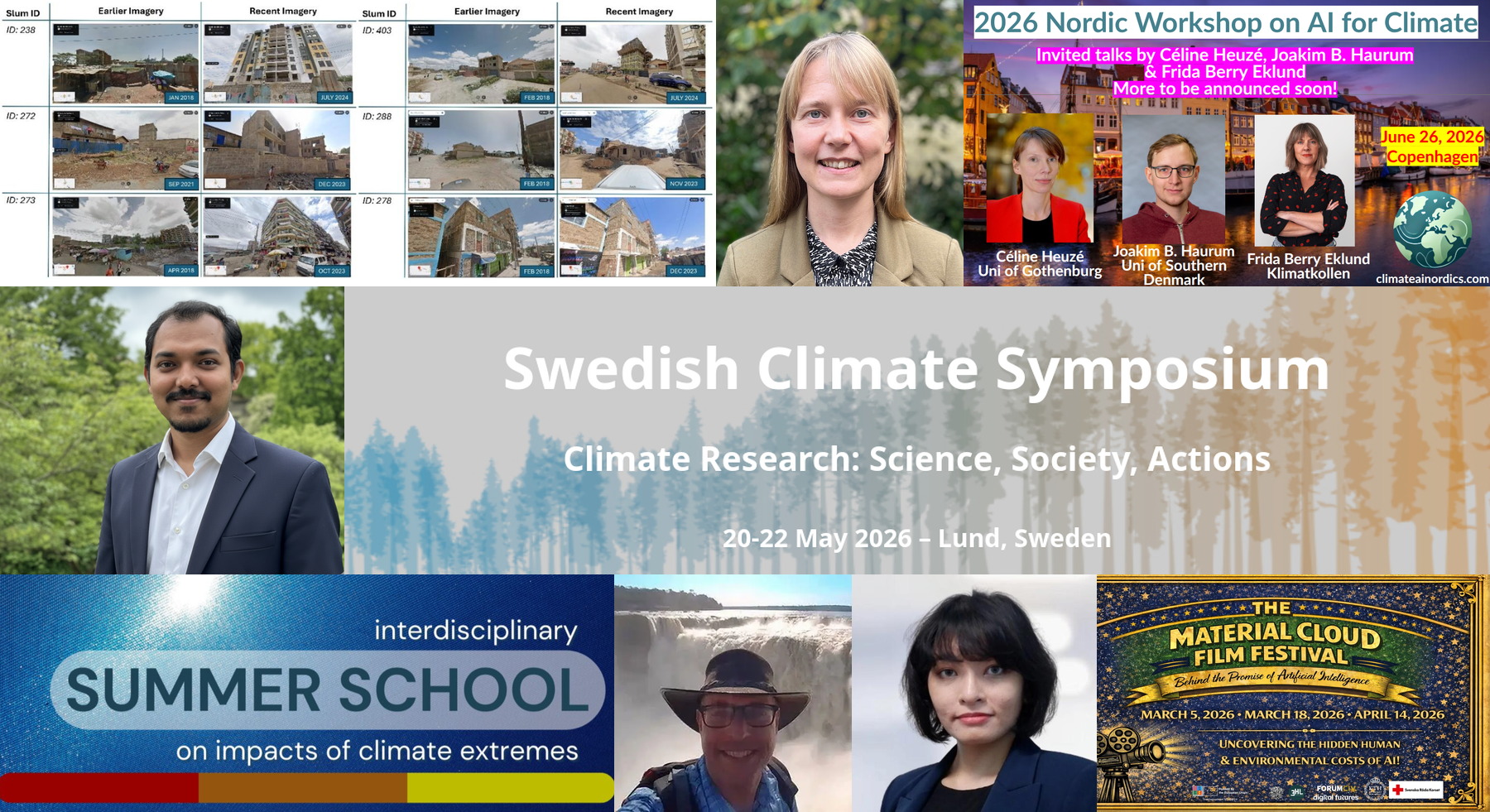
Welcome to the March edition of the Climate AI Nordics Newsletter!
Since launching in October 2024, our community has grown to 231 members. Together, we connect researchers and practitioners working at the intersection of artificial intelligence and climate action—spanning mitigation, adaptation, and environmental monitoring.
If you know colleagues in academia, public agencies, or industry who share these interests, invite them to join us at climateainordics.com/join.
This month, we are excited to announce the 2026 Nordic Workshop on AI for climate in Copenhagen in June. Furthermore, we explore AI-driven mapping of urban climate vulnerability, feature Armi Tiihonen’s work on solar cell materials, and share a wealth of new job openings and upcoming workshops and seminars across the Nordic region.
Community spotlight
Featured project: DEPRIMAP - AI-driven Mapping of Urban Deprivation and Climate Vulnerability at Global Scale
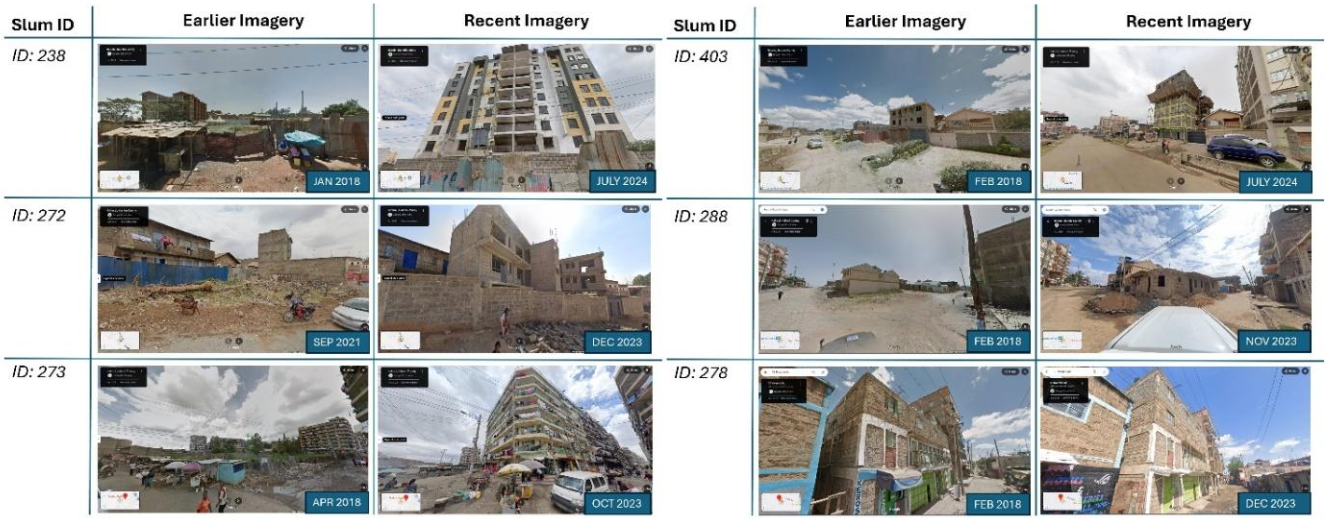
Climate risk is not evenly distributed within cities. Motivated by this, the DEPRIMAP project develops AI and satellite data to identify where vulnerable populations live and how exposed they are to hazards across the Global South.
Read more!
Featured member, March 2026: Armi Tiihonen
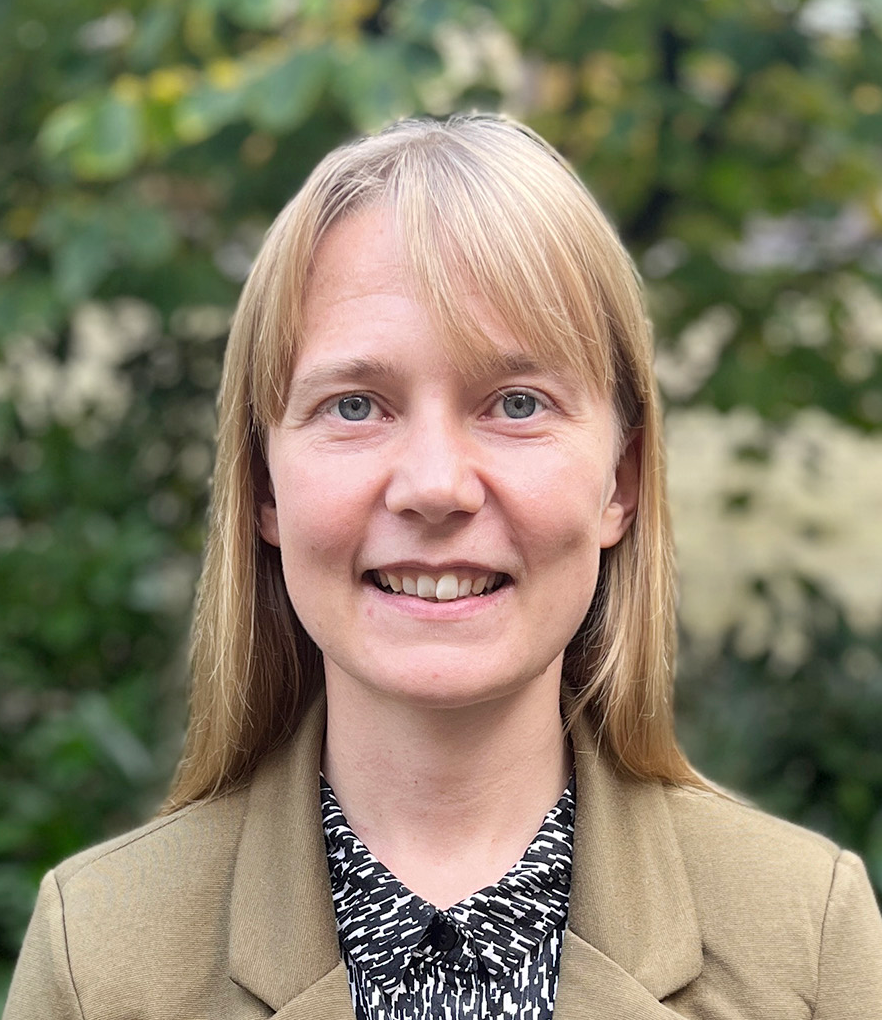
Armi Tiihonen is an Assistant Professor at Chalmers University of Technology, in the Department of Mechanical Engineering. Her research focuses on the development of materials for more robust and stable solar cells, using approaches accelerated by machine learning and laboratory automation.
Read more!
News
More info on the 2026 Nordic Workshop on AI for Climate
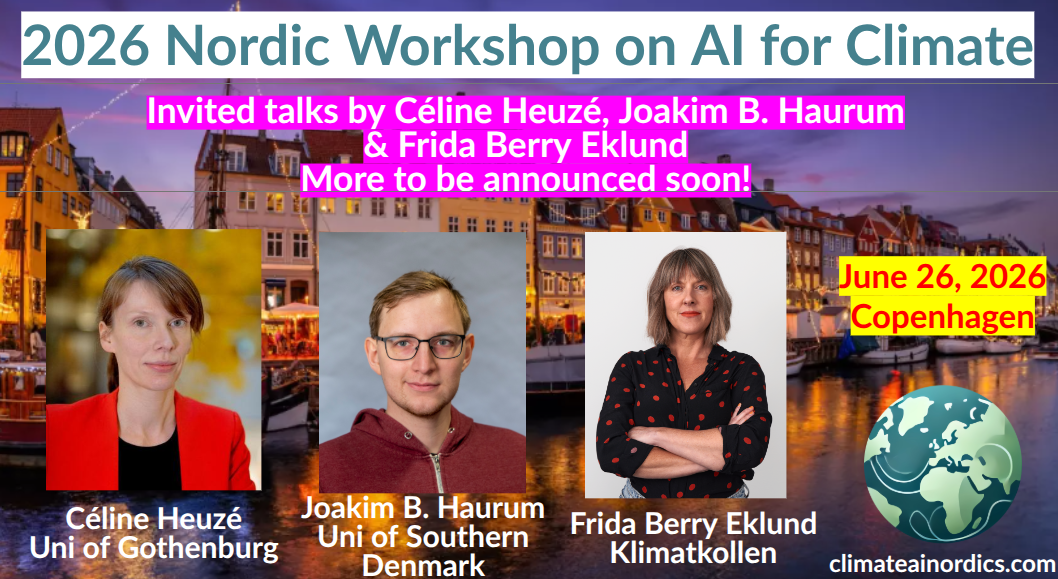
2026-03-27 Climate AI Nordics is excited to now provide more information about our upcoming annual workshop - The 2026 Nordic Workshop on AI for Climate - to be held on June 26th, 2026 in Copenhagen!
Read more!
Coming events
Machine learning based classification of tree crops of Syrian Arab Republic
Event date: 2026-04-23.
Webinar with Purnendu Sardar, Lund University. Accurate mapping of tree crops is vital for regional resource management, ecosystem service assessment, and the support of local livelihoods within the Syrian Arab Republic. Despite their socio-economic importance, tree crops are frequently misclassified or omitted in global and regional cropland products due to their complex spectral signatures and structural similarities to natural vegetation. This study proposes an integrated machine learning framework that combines the computational power of Google Earth Engine (GEE) with Python to enhance classification precision of tree crops across Syria. The methodology evaluates the integration of Global Ecosystem Dynamics Investigation (GEDI) LiDAR data with Sentinel-2 multi-spectral imagery to facilitate robust tree crop mapping. By utilizing GEE for the large-scale preprocessing of Sentinel-2 time-series data, the workflow generates high-dimensional, machine-learning-ready datasets that incorporate both structural and phenological variables. A Convolutional Neural Network (CNN) is subsequently trained in Python, chosen for its proficiency in processing time-series remote sensing data where temporal spectral patterns are more diagnostic than spatial textures. This approach allows the model to capture the distinct phenological cycles of various tree species, overcoming the limitations of traditional pixel-based or purely spatial classifiers. The findings underscore the efficacy of the CNN in distinguishing tree crop cover with high efficiency, demonstrating that the fusion of LiDAR-derived structural metrics with multi-temporal satellite data significantly reduces classification errors. The resulting high-resolution tree crop map provides an essential tool for sustainable agricultural planning and resource allocation in Syria.
Read more!
Swedish Climate Symposium
Event date: 2026-05-20.
The call for abstracts is now open for the Swedish Climate Symposium (Lund, May 20–22, 2026). The event focuses on “Science, Society, and Actions,” connecting researchers with policymakers. If you are applying AI or data science to climate challenges, don’t miss the chance to present your findings. Registration opens in January.
Read more!
Climes interdisciplinary summer school 2026
Event date: 2026-06-15.
The Climes Summer School 2026 at Uppsala University offers doctoral, postdoc, and advanced master’s students an interdisciplinary curriculum focused on climate extremes, public health, and societal impacts. The program features a specialized AI component where participants use deep learning and natural language processing to automate the extraction of climate data from texts. While the school is free to attend, applicants must submit their motivation and support letters by March 22nd, 2026, and are generally responsible for their own travel and lodging.
Read more!
2026 Nordic Workshop on AI for Climate
Event date: 2026-06-26.
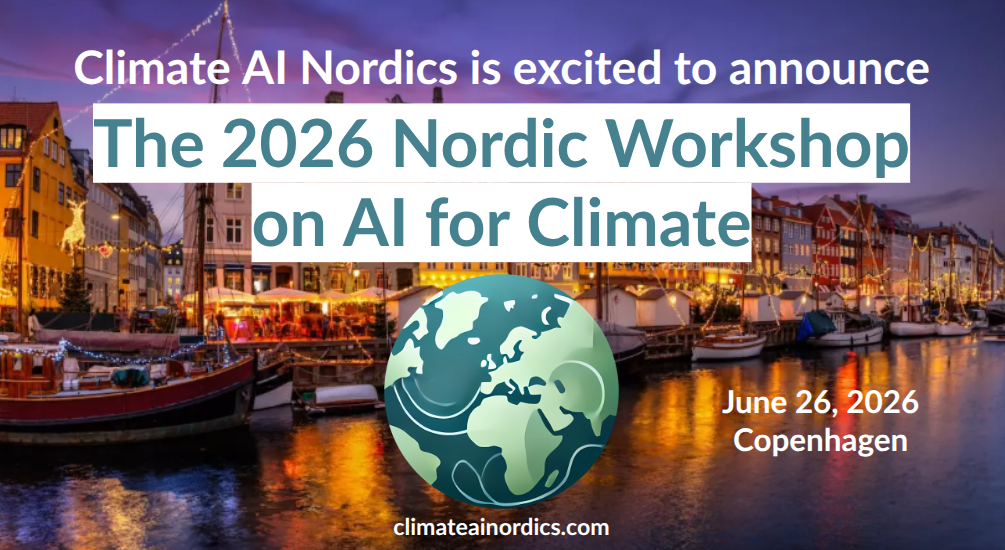
The 2026 Nordic Workshop on AI for Climate will gather researchers from the Nordics. This one-day, in-person workshop, will take place in Copenhagen, June 26th 2026. The workshop will feature a mix of keynotes, oral presentations, and posters around the topics of AI for tackling climate change, including AI for biodiversity and the green transition. The workshop will be a meeting point for a wide range of researchers from (primarily) around the Nordic countries.
Read more!
Recent events
AI in the wild: How Neural Networks Help Us Understand Our World Through Sound

This event took place 2026-03-26. Webinar with Jeppe Rasmussen, University of Copenhagen. Bioacoustics, the study of nature’s sounds, has long been a powerful tool for studying wildlife. With the rise of artificial intelligence, particularly deep learning, the potential of this field has expanded dramatically. By applying advanced AI algorithms to bioacoustic data, researchers can now identify and monitor species with greater accuracy, even in environments where visual observation is difficult, such as dense forests or deep oceans. This capability is especially critical as we face the sixth mass extinction. AI-enhanced monitoring offers new hope for conservation by providing deeper insights into the presence, behavior, and well-being of endangered species. Beyond detection, AI also opens doors to understanding animal communication and emotional states, thanks to its ability to autonomously identify and prioritize key acoustic features. In this talk, I will present a series of case studies spanning multiple species and ecosystems to illustrate how cutting‑edge AI research can meaningfully advance our understanding of the living, complex world around us—and how these methods can help mitigate the biodiversity crisis we face and discover the surprisingly rich inner life of the animals surrounding us.
Bridging data gaps in the Global South: Harnessing AI and Earth observation in the humanitarian sector

This event took place 2026-03-19. Webinar with Isabelle Tingzon, RISE. This talk highlights how AI and Earth Observation (EO) are transforming data availability for two global challenges: climate resilience and universal school connectivity. In the Caribbean, where extreme climatic hazards like hurricanes, floods, and landslides can devastate over 90% of built infrastructure across Small Island Developing States, comprehensive and up-to-date housing stock information is critical to enable resilient housing operations but is often incomplete, inaccessible, or completely non-existent. The “Digital Earth for Resilient Caribbean” initiative addresses these gaps by integrating EO data such as drone, LiDAR, satellite, and street-view imagery with AI workflows to classify roof types, materials, and building conditions. These efforts aim not only to enhance disaster response and recovery but also strengthen long-term resilience through government capacity building and knowledge exchange. In parallel, the presentation showcases UNICEF Giga’s mission to connect every school to the Internet by 2030. Reliable school location data is critical for planning telecommunications infrastructure, yet often inaccurate or incomplete in many low- and middle-income countries. By leveraging ML and satellite imagery, we’ve developed scalable pipelines to map schools across Africa on a nationwide scale, helping to ensure that no child is left behind in accessing digital learning opportunities. Together, these projects demonstrate how Geospatial AI can help bridge critical data gaps in the Global South, supporting both climate adaptation and inclusive education.
International Conference: Climate Impacts in a Changing World 2026

This event took place 2026-03-092026-03-11. The Swedish Centre for Impacts of Climate Extremes (CLIMES) invites abstract submissions for the international conference Climate Impacts in a Changing World 2026, held in Uppsala on March 9–11, 2026. The event fosters interdisciplinary dialogue on the wide-ranging impacts of climate extremes on human and natural systems.
The Material Cloud Film Festival

This event took place 2026-03-052026-04-14. The Marie Skłodowska-Curie project LIBRA proudly announce The Material Cloud Film Festival, a three-night film festival exploring the often unseen material realities behind artificial intelligence, including labour conditions, extractive supply chains, and power concentration.
Job openings
Research Scientist (Postdoc) - Remote Sensing

Natural Resources Institute Finland (Luke) is hiring a postdoctoral researcher for the “Digital Twin of Boreal Forest Structure” project, focusing on developing machine learning methods for large-scale, tree-level forest mapping using remote sensing data for biodiversity.
Deadline: April 22nd, 2026
PhD Student for Sustainable and Resource-Efficient Machine Learning

Linköping University is seeking a PhD student to research sustainable and resource-efficient machine learning, focusing on methodologies to reduce computational, energy, and storage demands, and associated carbon emissions, while maintaining model quality.
Deadline: April 24th, 2026
PhD Fellowship in Machine Learning for Wetland-Based Climate Change Mitigation

The University of Copenhagen is offering a fully-funded PhD fellowship at its Department of Computer Science, focusing on developing novel machine learning methods to model greenhouse gas fluxes from wetlands using remote sensing and ground-level measurements for climate change mitigation.
Deadline: April 06th, 2026
Associate Senior Lecturer (Assistant Professor) in Data-Driven Evolution and Biodiversity

The Swedish University of Agricultural Sciences (SLU) is recruiting a tenure-track fellow to develop data-driven research in evolution and biodiversity, applying machine learning and computational methods to aquatic or terrestrial systems.
Deadline: 2026-04-17
Machine learning engineer for computer vision and controlled pesticide-use.
Dimensions Agri Technologies (DAT) are recruiting a machine learning engineer. The selected candidate will help reduce and optimize the use of pesticides by developing targeted schemes through machine learning model assisted computer vision.
Deadline: Rolling
Your news in the newsletter!
Make sure to share your work with us, by sending us an email ( contact@climateainordics.com), posting in our Slack or some other channel, and we’ll add it to the news feed! Take the chance of showcasing your work or your events to the community!
Also be sure to follow us on LinkedIn and BlueSky. Climate AI Nordics will have the most impact if you repost and like our stories!
Climate AI Nordics is a network of researchers working to harness AI in tackling the climate crisis through both mitigation and adaptation.
We promote the development of AI-based tools and optimization methods that support sustainable decision-making—helping reduce emissions, restore ecosystems, and build climate resilience.