
Machine learning based classification of tree crops of Syrian Arab Republic
Event date: 2026-03-05
Event location:
Welcome to this week’s Learning Machines seminar.
This seminar is a collaboration between RISE and Climate AI Nordics – climateainordics.com.
Title: Machine learning based classification of tree crops of Syrian Arab Republic
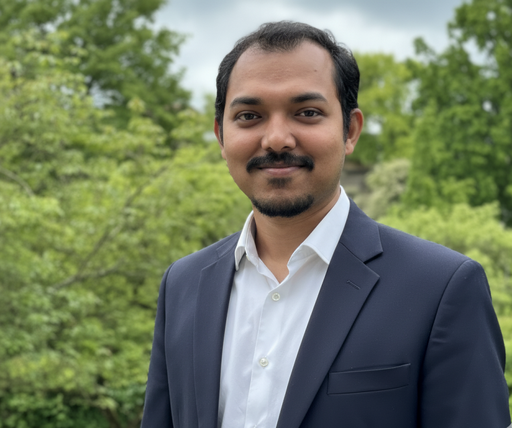
Speaker: Purnendu Sardar, Lund University
Abstract: Accurate mapping of tree crops is vital for regional resource management, ecosystem service assessment, and the support of local livelihoods within the Syrian Arab Republic. Despite their socio-economic importance, tree crops are frequently misclassified or omitted in global and regional cropland products due to their complex spectral signatures and structural similarities to natural vegetation. This study proposes an integrated machine learning framework that combines the computational power of Google Earth Engine (GEE) with Python to enhance classification precision of tree crops across Syria.
The methodology evaluates the integration of Global Ecosystem Dynamics Investigation (GEDI) LiDAR data with Sentinel-2 multi-spectral imagery to facilitate robust tree crop mapping. By utilizing GEE for the large-scale preprocessing of Sentinel-2 time-series data, the workflow generates high-dimensional, machine-learning-ready datasets that incorporate both structural and phenological variables. A Convolutional Neural Network (CNN) is subsequently trained in Python, chosen for its proficiency in processing time-series remote sensing data where temporal spectral patterns are more diagnostic than spatial textures. This approach allows the model to capture the distinct phenological cycles of various tree species, overcoming the limitations of traditional pixel-based or purely spatial classifiers.
The findings underscore the efficacy of the CNN in distinguishing tree crop cover with high efficiency, demonstrating that the fusion of LiDAR-derived structural metrics with multi-temporal satellite data significantly reduces classification errors. The resulting high-resolution tree crop map provides an essential tool for sustainable agricultural planning and resource allocation in Syria.
About the speaker: Dr. Purnendu Sardar is a Postdoctoral Research Fellow at the Department of Physical Geography and Ecosystem Science, and at the Centre for Advanced Middle Eastern Studies at Lund University. His research focuses on studying vegetation and land-use changes in the Middle East using remote sensing techniques. Originally trained in animal biology, Dr. Sardar holds a PhD from the Indian Institute of Technology (IIT) Dhanbad, where he conducted research on the impact of climate change on the mangrove ecosystems of Sundarbans, India. He has published in the fields related to geospatial applications for addressing environmental challenges. Following his PhD, Dr. Sardar worked in the climate-action industry, leading a team of geospatial experts to execute large-scale agroforestry projects in India. Additionally, he has served as a geospatial consultant for international companies. Dr. Sardar is interested in understanding conflicts, land-use changes and ecological processes at landscape level using geospatial tools.
Location: This is an online seminar. Connect using Zoom.
Date: 2026-03-05 15:00
Upcoming seminars:
- 2026-03-19: Bridging data gaps in the Global South: Harnessing AI and Earth observation in the humanitarian sector, Isabelle Tingzon, RISE
- All seminars are 15:00 CET.
More information and coming seminars: https://ri.se/lm-sem
– The Learning Machines Team